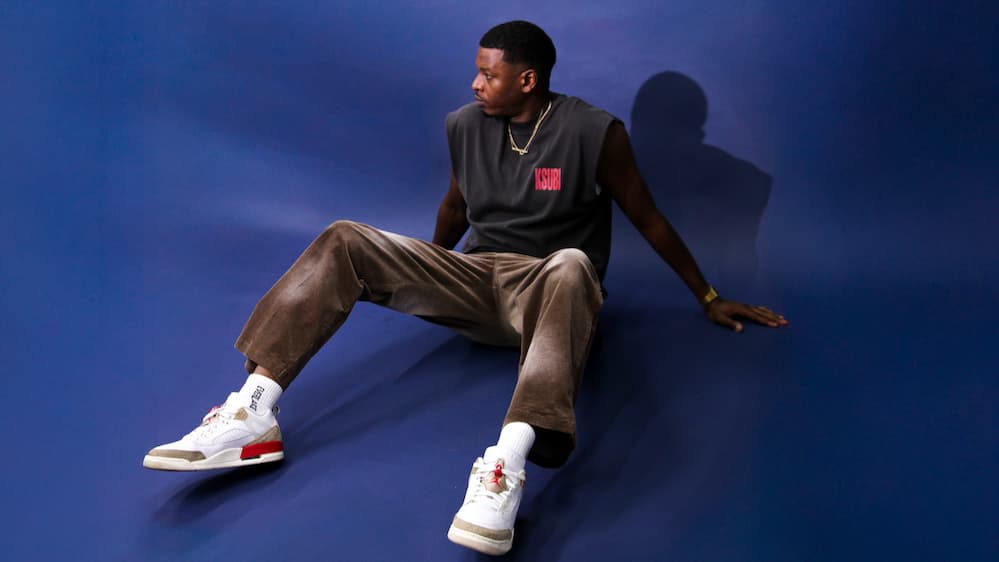
Raiza Biza's new career-defining album Pangea sees him go full-circle. The rapper who previously called Hamilton home, has just dropped his ninth full-length record from Kigali, Rwanda - the country his family fled before he was even born and one he'd never actually set foot in until a few years ago. We caught up with him from his temporary-turned-permanent home to talk culture shock, chasing an authentic sound, and the ancient art of Rwandan poetry that closes the record.
So where do we find you, still in Kigali?
Haha, I kind of fell in love with the place. It was supposed to be a temporary visit, but I kept extending and extending, and next thing you know I’m pretty much living here. But this is home. My dad was born here and my roots are here, even though I never really visited as a kid. My first time was maybe three years ago.
Take us back. In ‘Sunny Days’ you say you were 10 when you were told that you’re leaving Africa. Is that how coming to New Zealand came about?
Yeah I was 10 when we were told that we were going somewhere else. I think I was 11 when it became official and when we left. That was when everything kind of changed for me.
Was going back to Rwanda something you'd been planning for a while?
The plan was to come with the bones of the album already there. I knew the theme, I knew what I wanted to speak about, but I felt like I needed to touch the ground here and work with a few people to complete the picture.
I always knew that one day I'd have to make an album that brought together my history, my past, my roots, as well as my more modern influences. I always thought that would be my final album, kind of bringing everything together, going full circle, because I've always made music about that experience of being what they call middle culture or third culture. My career wouldn't be complete until I made that album, circling back to where it started. It's always been on my mind since I started releasing full-length albums, I just didn't know when it was going to happen. So it wasn't spontaneous. It was always a plan.
Has the album changed much since those early sessions?
The whole album changed about four times since I started that process. When I first got in the studio with local producers and artists and started listening to the bones I'd made, it felt like someone from the diaspora trying to make an album influenced by Rwanda who'd never actually been there. It felt very inauthentic. So I scrapped a lot of it, I remade almost every single song. Some I replaced with other songs entirely.
This album is on its 27th or 29th version, from when I thought it was finished, when I was like, okay, I've got the tracks, now I just need the features. It changed a lot, and not always in a good way, because part of the reason it took so long is I just kept wanting to change more things. I was overanalysing it.
How did actually living there change what you wanted the album, or you, to be?
As I learned about Rwanda, about Africa, about the culture here and the way people see life, it shaped the way I saw the album, and the way I saw the world. This album was probably the most important thing in my life for the last four years, but seeing the way life is here, and what people have to go through just to make a living and enjoy life, it put things in perspective.
After spending time here, I realised being able to pursue music is such a luxury, such a privilege. A lot of people with more talent than me haven't had that opportunity.
In New Zealand and other Western countries, music goes hand in hand with lifestyle, you've got your gym playlist, your breakup album. In some places in the world, life is too busy, too crazy, to even think about creative outlets, or to sit and enjoy a whole album. The album changed a lot, but I changed a lot too in the process. It feels like I've been put in a vacuum, trying to grow twenty years in a five year span, because everything I was used to in New Zealand and Australia is totally different over here.
You'd achieved a lot back home already. What made you feel there was more growth to chase here?
I'd more or less done everything I could in the New Zealand and Australian scene. I released more than ten albums, toured every corner of Australia and New Zealand, had recognition in terms of nominations and things like that. There was no more growth left to achieve. After spending these last four years over here, it's opened a new chapter. I don't know if I'm going to stay for the next five years, or travel to other places in Africa, or see other places in the world, but I realised I wouldn't be able to evolve musically unless I experienced different things.
What's surprised you most about day-to-day life there?
There's little things you'd never expect. Over here, people don't really smile at strangers. At first I thought, do they know I grew up here, do they not like me? Then after a while you realise it's not that, I was bringing my own preconceived notions about what it means to be friendly, and that's just not part of the culture here. And then there's the selfie culture, it's pretty much non-existent. It's been so hard for me to make content, because everyone's like, who do you work for, why are you taking videos? Whereas in New Zealand, if I pull out my selfie cam, random strangers will jump right in.
Pangea pulls in a lot of New Zealand's Afro Kiwi artists too. What does that scene mean to you?
In this age of globalisation, all these cultures and sounds and identities are intertwined. What most immigrants in New Zealand have gone through is quite similar to mine, it's not just hey we lived here and now we live here. I went from Congo to Zambia to South Africa to New Zealand, and everywhere you pick up bits and pieces along the way. Now all of those things are scattered across the project.
New Zealand's still very new in terms of immigrant culture, not like Australia, which has communities like the Greek community or the Turkish community that have been there for generations. New Zealand might have two and a half, three generations. So it's cool that all these new young Afro Kiwi artists are coming out. When I was coming up, I was the only one, period. I tried to get as many of the New Zealand Africans on board for this one. It's something we're witnessing bloom in real time, and hopefully in a decade or two we'll look back and say, remember when this was emerging.
Tracks like Amanyarwanda and Crazy have a distinct sound. How much of that is an everyday sound in Kigali?
That's something that made this album a bit challenging, the Rwandan music scene is still very new. We haven't had the luxury of a musical history like Nigeria or Ghana or South Africa, going back to your Fela Kutis and your Lucky Dubes, generations of history to draw from. So none of that is really an everyday sound in Rwanda. Dr Nganji, who produced Amanyarwanda and Crazy, and I tried to incorporate Rwandan sounds, but we never quite met in the middle.
We don't have, I'd say, a specifically Rwandan sound yet, it's still evolving to become more Rwandan. Part of the problem is we're such a small market here, so to cross over to bigger markets like South Africa, Nigeria or Congo, you tend to have to borrow from those sounds so people can relate to it. I felt like I was hitting walls trying to make something distinctly Rwandan, it just wouldn't sound right. But that's also the exciting part about being here right now, as the scene emerges we get closer to that sound, and I hope to contribute to it.
I remember a decade ago it was the same for Nigerian music. Even Burna Boy went through a reggae phase, taking a lot from Jamaican culture, then a phase where artists were making things that sounded like 50 Cent or Kanye, and eventually they landed on their own sound. Now the rest of the world wants a beat that sounds Nigerian.
What's next on that front?
I'm hoping to take a break and actually go to the villages. There are musical instruments here that are native to this part of the world, things you can only really find here, like an ikembe, a kind of banjo-meets-keyboard in a coconut shell. I want to spend some time really working at finding what that sound is.
There's one track with Mazbou Q, ‘Empathy’ that comes in almost out of nowhere. How did that one land?
It was very hard to make this album sound cohesive, because I was drawing from so many different sounds and sides of my creativity. But I've stopped worrying about it sounding cohesive. In this age, people want something more like a playlist, they don't necessarily need it to be cohesive. Some people have told me that song is the standout, and I'm like, really, that's totally left field. I think there's something in there for everyone, you don't have to like one specific sound, there might be something else you draw from it.
Yes! I totally feel that when I’m listening through. Now, the album has a poetry interlude and closes with a spoken word outro. What's the story there?
It's a form of poetry that goes back hundreds of years in Rwanda, it reminds me of battle rap in a way. Historically, every young man would be taught his family poem, and that poem held your history, your family tree, your exploits, how many cows you had. It was like a running history, passed down generation to generation. I only found out about it as I was finishing the album, and I knew I needed it on there, because the delivery is so spoken word, almost pop. It fascinates me that this type of storytelling existed way before hip hop. It's the same essence, a living, breathing history. The same as when you listen to Public Enemy, that was like a documentary, or the news of the time.
There's a deeper conversation to be had about the connection between native cultures, whether it's Maori culture or African cultures. There's an oral tradition, a poetry or storytelling element woven into the music and the customs. It's definitely something I'd love to dig deeper into. When you look at something like the haka, there's a similarity, it's about saying this is who I'm from, this is what I represent, and standing for that.
Pangea is out now via Low Key Source on Spotify, or to buy on Bandcamp. Raiza Biza is currently based in Kigali, Rwanda, so keep an eye online for some potential New Zealand dates over summer. Follow him on Instagram at @raizabiza.


.webp)
.jpg)


.webp)






.jpg)

.jpg)
.jpg)
.webp)


.jpg)
Next Post

The Studnut

.jpg)
.jpg)
.jpg)
.jpg)


.jpg)

.jpg)
Next Post

DevilskinS

.jpg)
.jpg)
.jpg)


.jpg)
%20Feature%20(1).jpg)
.jpg)
.jpg)
.jpg)
.jpg)
Next Post
Plant-Powered


.webp)
Next Post
Beach Hop 2026

.jpg)
%20(1).jpg)
Next Post

Parmageddon

Next Post
Combustion Tofu
.jpg)
.jpg)

.jpg)
.webp)

.jpg)
.webp)
.jpg)
Next Post
.jpg)
.jpg)
.jpg)

.webp)

.jpg)
.webp)